From Manual Marketing to AI-Driven Growth
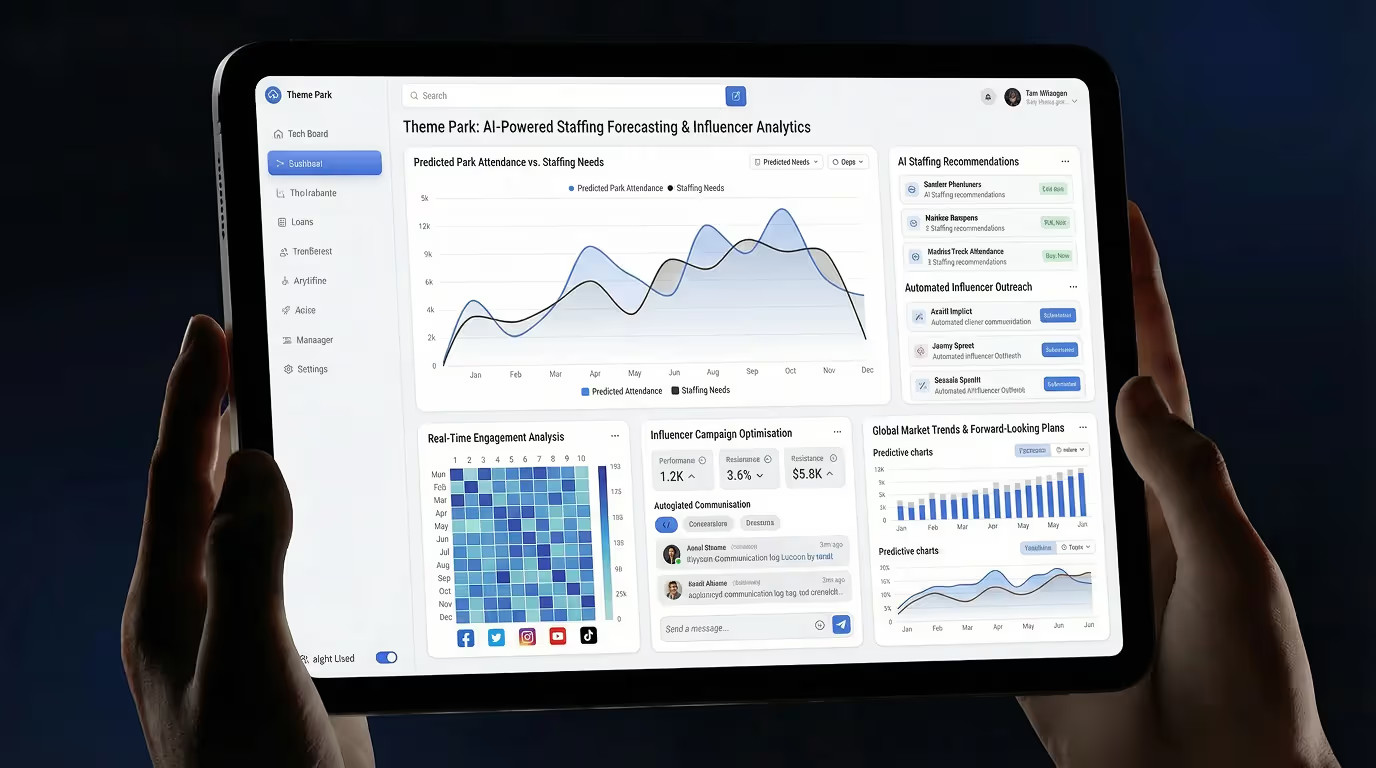
We partnered with a global brand to replace slow, fragmented workflows with an AI platform that analyzes engagement in real time, predicts performance, and unlocks faster, smarter campaign execution across markets.
Background
We built an intelligent scheduling platform for a multi-site theme park operator managing 6,000+ employees across multiple locations. The system combines algorithmic optimization with conversational AI to automate complex shift scheduling while balancing operational demands, regulatory requirements, and employee preferences.
Challenge
Scheduling managers faced a near-impossible job: building shifts for thousands of employees while juggling changing demand, role and certification requirements, labor laws, and union rules. Manual scheduling took 40+ hours per cycle, led to staffing mismatches and peak bottlenecks, and frustrated employees with rigid shifts and little input.
Solution
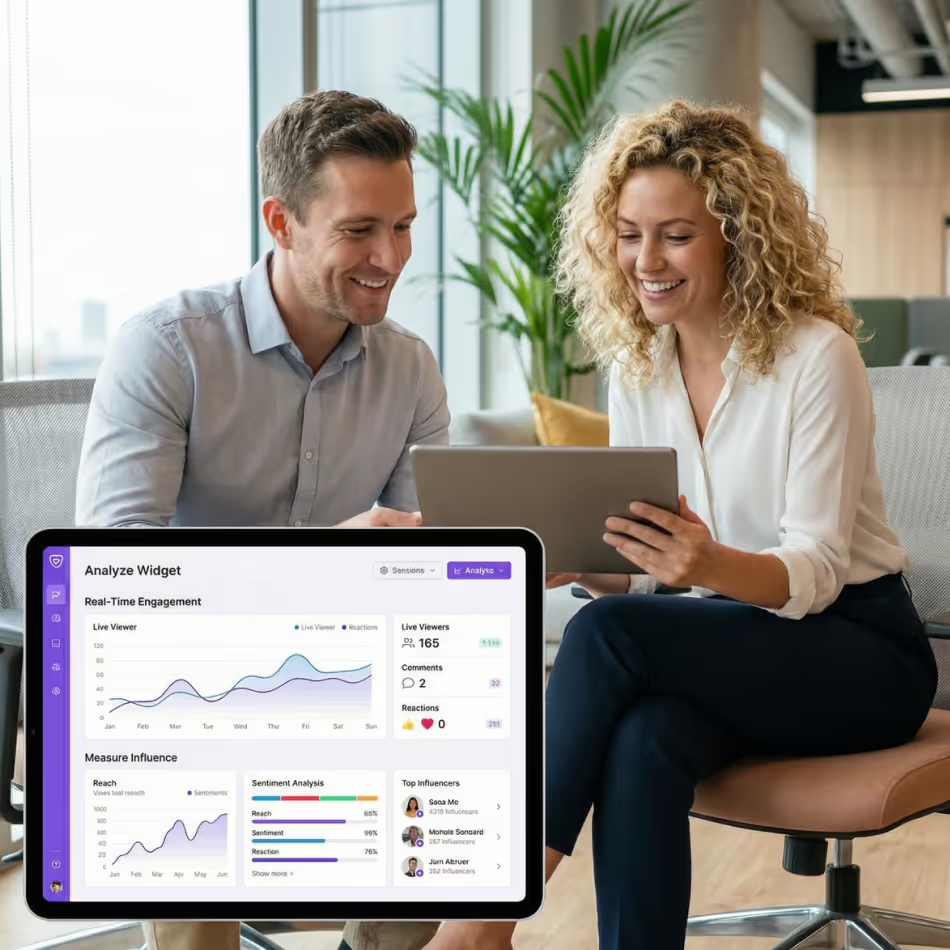
We introduced an AI-driven scheduling system that automates shift planning while balancing operational requirements and employee preferences. The platform replaces manual scheduling with optimized, compliant, and manager-ready shift plans.
What we delivered:
Algorithmic scheduling using Google OR-Tools to optimize shifts
Conversational AI for employees to submit shift requests via SMS
LLM-based agents to interpret requests and apply preferences
Natural language rule input for managers to define policies easily
Automated schedule generation requiring only final approval
Real-time integrations with forecasts, certifications, and constraints
Technologies
The solution is built on a scalable, cloud-native stack that combines optimization algorithms, large language models, and real-time communication to support complex scheduling at scale.
Google OR-Tools for constraint-based shift optimization
Vertex AI (Gemini) for understanding employee shift requests
Agentic orchestration (Python) to process requests and validate constraints
Google Cloud infrastructure with SMS integration for two-way communication

Impact
The AI-driven scheduling system delivered measurable improvements for both employees and managers, reducing friction while significantly increasing operational efficiency.
Employee satisfaction
67% reduction in scheduling complaints and 18% improvement in retention among hourly staff
Manager efficiency
Scheduling time reduced from 40 hours to 3 hours per cycle (92.5% time savings)
Questions & Answers
Strong decisions start with clarity. These Q&As give you a quick understanding of how we work, what to expect, and how we help you succeed with AI.
AI relies entirely on the quality of your data. Without consistent, clean, and connected data, AI models produce unreliable outputs. A data foundation ensures your data is accurate, trustworthy, and structured in a way that supports scalable AI.
Timelines vary depending on your current maturity, number of data sources, and governance needs. Most organisations see a functional foundation in 6–12 weeks, with continuous improvement over time.
Not always, but it’s strongly recommended. Cloud platforms simplify integrations, improve scalability, and lower operational costs. We work with your existing tools if needed, but a modern cloud warehouse unlocks far more potential.
Governance covers everything from ownership and access control to data quality rules, cataloging, lineage, and compliance. It ensures your data stays reliable, auditable, and secure — essential for any AI system.
We assess each system, map its structure, and build automated pipelines that clean, transform, and centralise your data. This eliminates manual extraction and creates a single, consistent source of truth across the organisation.
Let’s talk about your AI use case
Have a business challenge in mind? We’ll help you assess feasibility, define the right approach, and build a clear path to execution.