Reinventing in-room dining with AI voice agents
An international hotel group partnered with Intersect AI to modernize in-room dining and guest requests using an AI voice agent. The solution reduced staffing needs, improved accuracy, increased upsell revenue, and delivered faster, more consistent guest experiences while integrating seamlessly with existing hotel systems.
Background
One of the world’s leading hospitality companies, operates over 8,800 properties worldwide. An AI audit revealed inefficiencies in its in-room dining operations, which relied heavily on manual call handling by hotel staff.
Challenge
Each hotel required an average of 5 full-time staff to manage phone orders, with a 23% error rate caused by miscommunication and inconsistent execution. This strained operations, drove up costs, and reduced guest satisfaction. Missed upsell opportunities also limited revenue growth.

Solution
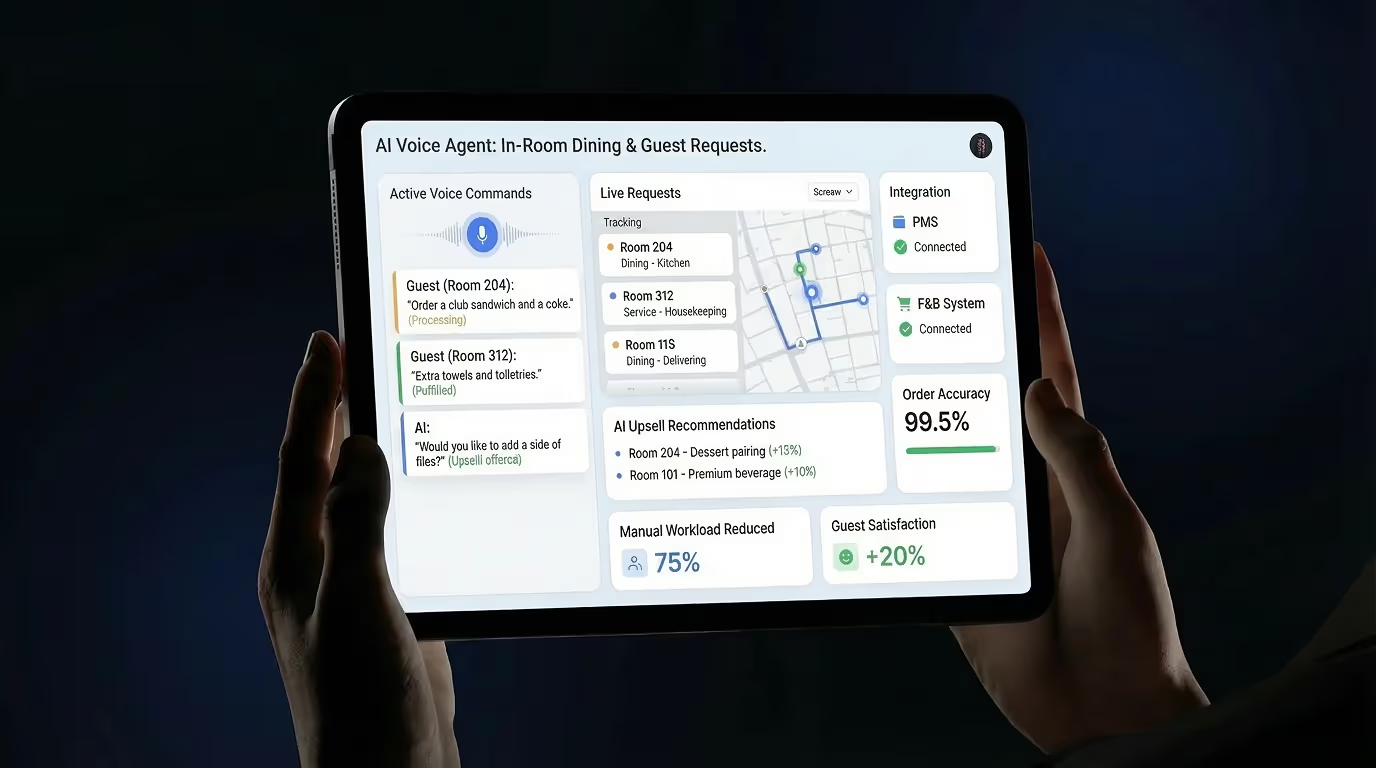
We designed and deployed an AI-powered voice agent to automate in-room dining and guest service requests. The system integrated with client’s property management and F&B order systems, enabling real-time tracking, automated ticketing, and AI-driven upsell recommendations. A full onboarding program and stakeholder training supported rapid rollout.
Technologies
Conversational AI, natural language processing, property management system integration, automated task routing, AI-driven recommendation engine, live reporting dashboards.

Impact
The shift from manual execution to an AI-powered operating model delivered immediate, measurable improvements across strategy, productivity, and cost efficiency.
Efficiency
Staffing reduced from 5 to 1 per hotel across 500 properties, generating $72m in annual savings.
Accuracy
Error rate cut from 23% to 7%, boosting accuracy and reliability.
Revenue
Upsell revenue increased by 32% through intelligent prompts.
Experience
Guest NPS improved by 13%, reflecting faster and more consistent service.
Questions & Answers
Strong decisions start with clarity. These Q&As give you a quick understanding of how we work, what to expect, and how we help you succeed with AI.
AI relies entirely on the quality of your data. Without consistent, clean, and connected data, AI models produce unreliable outputs. A data foundation ensures your data is accurate, trustworthy, and structured in a way that supports scalable AI.
Timelines vary depending on your current maturity, number of data sources, and governance needs. Most organisations see a functional foundation in 6–12 weeks, with continuous improvement over time.
Not always, but it’s strongly recommended. Cloud platforms simplify integrations, improve scalability, and lower operational costs. We work with your existing tools if needed, but a modern cloud warehouse unlocks far more potential.
Governance covers everything from ownership and access control to data quality rules, cataloging, lineage, and compliance. It ensures your data stays reliable, auditable, and secure — essential for any AI system.
We assess each system, map its structure, and build automated pipelines that clean, transform, and centralise your data. This eliminates manual extraction and creates a single, consistent source of truth across the organisation.
Let’s talk about your AI use case
Have a business challenge in mind? We’ll help you assess feasibility, define the right approach, and build a clear path to execution.